
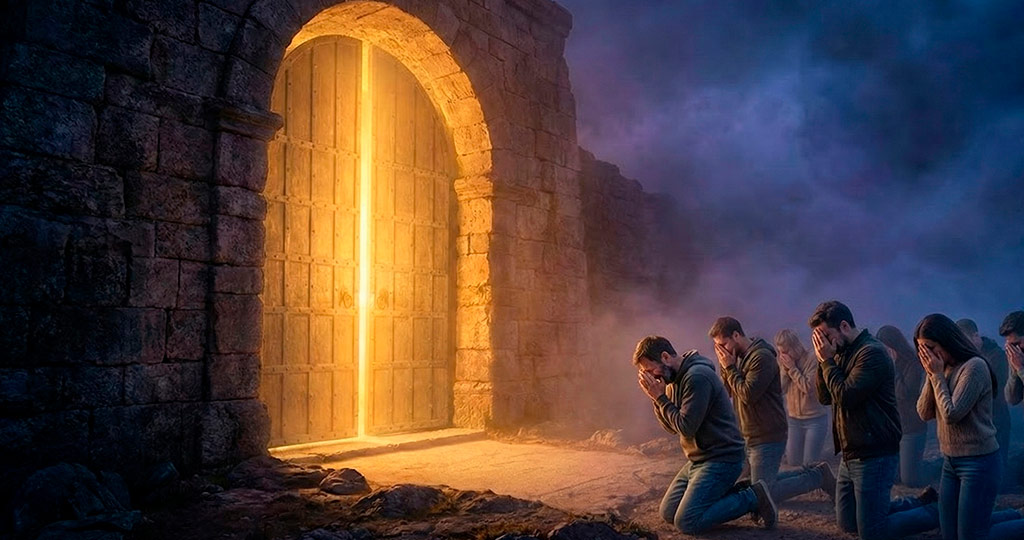
Introduction: The Words Every Christian Dreads Hearing
There are few passages in the Bible that cause more anxiety for a sincere believer than Matthew 7:21-23. In it, Jesus describes a future judgment where people who seem to be his followers are turned away with the terrifying words, “I never knew you; depart from me.” These aren’t pagans or atheists; they are people who actively call him “Lord,” prophesy, cast out demons, and perform mighty works in his name. This Matthew 7 warning dismantles comfortable assumptions and forces every believer to ask a terrifying question: Is my faith built on the rock of obedience, or the sand of self-deception?
How can people who operate in supernatural power and minister in the name of Jesus be utterly rejected by him? What is the real, defining difference between a true follower of Christ and someone who is just paying “lip service”? It’s a scenario that cuts to the very heart of what it means to be a Christian.
Drawing from a detailed analysis by Christian apologist Sam Shamoun, this article will distill three powerful, and perhaps surprising, truths from this challenging passage. These takeaways clarify what Jesus identifies as the true evidence of a saving relationship with him.
1. The Matthew 7 Warning Reveals Miracles Are Not Proof of Salvation

The most jarring aspect of Matthew 7 is that the people being rejected point to their incredible spiritual accomplishments. They cast out demons and did “many mighty works.” This leads to a counter-intuitive but crucial truth: performing supernatural acts, even in the name of Jesus, is not the ultimate sign that a person is a true Christian.
The primary biblical evidence for this is the shocking example of Judas Iscariot. In Matthew 10:1-8, Jesus gives his twelve disciples authority to perform miracles. The text explicitly lists Judas Iscariot—the one “who betrayed him”—among those who received this power. Jesus commanded all twelve of them, including Judas, to “Heal the sick, raise the dead, cleanse lepers, cast out demons.”
The implications are staggering. Judas, whom the Bible calls a betrayer, a “devil” (John 6:70), and the “son of perdition,” was empowered by Jesus to perform the exact same miracles as Peter, John, and the other apostles. He participated in a powerful, supernatural ministry, all while being destined to betray the Lord. The implications are staggering and unavoidable: a person can be a conduit for the authentic, supernatural power of God—raising the dead and healing the sick—and still be a “son of perdition” destined for condemnation.
“What more proof do Christians need that you can have fake Christians… doing miracles. And what more proof do you need that miracles are no proof that you belong to Jesus Christ. Because Judas belonged to the devil… And yet he raised the dead cleansed lepers healed the sick cast out demons and yet he was never truly a Christian.”
2. The Matthew 7 Warning Prioritizes Obedience Over Words

When the people in the passage address Jesus, they call him “Lord, Lord.” Jesus uses their own words to distinguish between an empty verbal confession and a genuine relationship expressed through action. In the biblical context, to call Jesus “Lord” is to affirm his ownership over your life. It means you exist to serve him and do what he commands.
The reason for their rejection is made plain when Jesus calls them “workers of lawlessness”—a term meaning they actively ignored and rejected his commands, despite using his name. Their words claimed him as Lord, but their actions proved they were their own masters.
Jesus doesn’t leave this declaration hanging. In the very next verse (Matthew 7:24), he provides the definitive illustration to explain who the “workers of lawlessness” are: the Parable of the Builders. He presents two types of people: the wise man who hears Jesus’ words and does them builds his house on a solid rock foundation. The foolish man hears the exact same words but does not do them, building his house on sand. The parable isn’t about intelligence; it’s about obedience. The storm of judgment reveals which foundation is real. True believers are those who put the words of Christ into practice.
Shamoun illustrates this with a marriage analogy, drawing on the biblical theme of Christ as the bridegroom and the church as his bride. You can tell your spouse “I love you” all day long, but if you consistently do what they hate and ignore what they ask, your words are meaningless. Your actions reveal the true state of your heart. In the same way, telling Jesus you love him while consistently disobeying his commands is a profound contradiction.
3. The Matthew 7 Warning Clarifies the Power of Jesus’ Name

This leads to a logical question: if these people were false or self-deceived, how could they perform genuine miracles like casting out demons? The answer reveals something profound about where the power truly comes from. The authority and power do not originate with the person’s spiritual status, faith, or righteousness. The power resides entirely and sovereignly within the name of Jesus itself.
The majestic authority of Jesus’ name is so potent that it can produce supernatural results even when invoked by an unbeliever or a “fake Christian.” The person’s spiritual condition does not “affect or nullify the sovereign power” inherent in the name of the Lord. Demons tremble at the name of Jesus, regardless of who is speaking it. The miracle is a testament to the power of Jesus’s name, not the spiritual state or worthiness of the person invoking it.
“The name of Jesus in of itself is all powerful. The name of Jesus in of itself is all sovereign. Even by the mouth of an unbeliever the name of Jesus gets results. In other words it really doesn’t matter whether you are a believer or not. The name of Jesus in of itself is all powerful.” – S. Shamoun
Conclusion: Where Is Your House Built?
The terrifying Matthew 7 warning ultimately serves as a powerful clarification. The true test of faith isn’t found in spectacular displays of power, passionate public prayers, or vocal declarations of “Lord, Lord.” Rather, it is found in the quiet, consistent, and often unseen foundation of obedience to the commands of Christ, rooted in a genuine love for him.
This passage forces us beyond surface-level religion and toward a sincere heart examination. It pushes us past what we say or what we can do and focuses on who we are becoming through submission to our Lord. In the end, it’s a question we must all ask ourselves: Are we merely hearing the words of Jesus, or are we actively building our lives upon them?
SOURCE: Sam Shamoun Explains the SCARIEST Bible Passage (Matthew 7:21–23)
Here is a list of scripture references that directly address the themes of the blog, including those mentioned in the text and additional verses that strongly support the topic.
- The warning to those who say “Lord, Lord” but do not obey: Matthew 7:21–23
- The Parable of the Wise and Foolish Builders: Matthew 7:24–27
- Jesus questioning those who call Him Lord but ignore His commands: Luke 6:46
- Judas and the disciples given authority to perform miracles: Matthew 10:1–8
- Jesus identifying Judas as a devil: John 6:70
- Professing to know God while denying Him by actions: Titus 1:16
- Deceiving oneself by being a hearer only, not a doer: James 1:22–25
- Even demons believing in God’s existence and trembling: James 2:19
- The emptiness of spiritual power and faith without love: 1 Corinthians 13:1–3
- The Lord knowing those who are His and the call to depart from sin: 2 Timothy 2:19

