I. Introduction: The Art of Disagreeing Deeply Interfaith dialogue is frequently reduced to a polite exchange of platitudes or a superficial clash of “proof texts.” However, when pursued with intellectual rigor, these conversations reveal a fundamental epistemic conflict. The impasse often lies in the fact that two people can use the same words to describe entirely different realities. To understand the friction between Islam and Christianity, one must examine the underlying “grammar” of their respective faiths. Central to this is the understanding of the biblical Trinity, illustrating how divergent definitions of justice, personhood, and textual integrity shape the search for truth. II. Takeaway 1: “Textual Variance” is Not “Corruption” A primary point of friction concerns the reliability of the Bible. The Muslim perspective often operates on a “letter-for-letter” benchmark of preservation. Christian apologist Avery argues that for the Christian, preservation is defined by the endurance of the core revelation across… read more

church creatives

Religion is frequently a matter of inheritance rather than investigation. For many, faith consists of a collection of traditions passed down through generations, seldom subjected to the rigors of historical or textual scrutiny. However, when the primary sources of Islam and Christianity are placed in direct dialogue, a series of logical and theological crossroads emerge. This tension is often referred to as the Islamic Dilemma—a specific logical trap where the Quran’s own verses appear to undermine its authority by validating the very scriptures that contradict its core message. The following takeaways distill high-impact theological debates, highlighting the inconsistencies that arise when believers move beyond modern commentaries and engage directly with the claims of their own texts. 1. The Uncreated Nature of Jesus (The “Word” Paradox) A central pivot point in this interfaith dialogue is the ontological status of Jesus. While standard Islamic teaching classifies Jesus as a mere human prophet,… read more
1. Introduction: The Forgotten Conversation about Jewish Messiah For many within the Jewish community, the figure of Jesus (Jewish Messiah)—or more accurately, Yeshua—is viewed through the lens of a centuries-old divorce. We are taught that “Jews don’t believe in Jesus,” and to many, he feels like a foreign, Gentile export, a figure fundamentally detached from the life and liturgy of Israel. This disconnect, however, is largely a product of history, specifically the divergence between the Second Temple era and modern rabbinic Judaism. If we peel back the layers of tradition and return to the Tanakh (the Hebrew Scriptures), we discover a “forgotten conversation.” We find that the most essential concepts of the Messianic faith are not Christian inventions, but are deeply rooted in our foundational texts. From the nature of God’s unity to the necessity of a mediator, the evidence suggests that Yeshua is not a departure from the Jewish path, but its ultimate destination. 2. The… read more
1. Introduction: The Paradox of Devotion We often speak of religious devotion as a climb toward the light, a series of steps that surely lead to peace. But for a young girl growing up in a devout home in Iran, the climb felt more like a descent. A Muslim encounter with the supernatural often starts with a search for purity, but for her, the rituals offered no refuge from her past. Having survived sexual assault by a relative at a tender age, she carried a “defilement” she felt she could never outrun. Driven by this internal agony, she threw herself into the heart of her faith, wearing the chador and performing rituals with frantic precision, only to find that the more she prayed, the more a specific darkness seemed to answer. 2. The “Empty Drum” of Ritualistic Performance The narrator’s transition into deep religiosity was marked by what she calls… read more
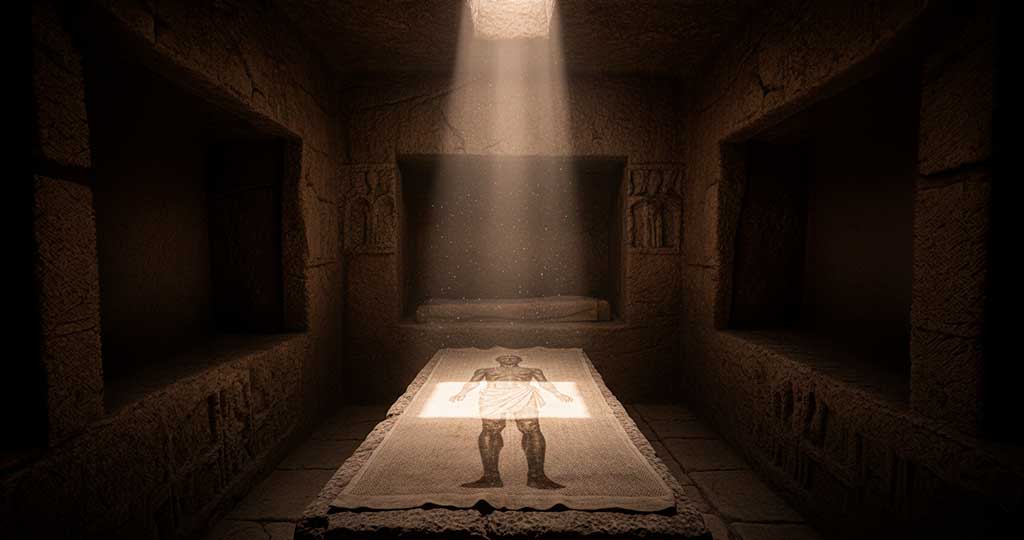
1. Introduction: The Relic That Refuses to Be Debunked If you visit The Kilns, the Oxford home of C.S. Lewis, you might notice an anomalous artifact above the mantle in the bedroom where he died. It is a 1931 photograph of the Shroud of Turin. Lewis, an intellectual giant and an Anglican, kept it there as a daily reminder that “our God has a face.” For a generation, the cloth was relegated to the attic of medieval curiosities, seemingly “debunked” by a 1988 radiocarbon study. However, the tide has turned; being “rational” in the 21st century actually points toward the cloth’s authenticity. It remains the only archaeological artifact that captures the forensic intersection of death, burial, and resurrection in a single piece of linen. 2. The Vanishing Image: A Mystery of Superficiality One of the most baffling physical properties of the cloth is the “8-foot rule.” If a researcher stands… read more

