
The Ancient Debate in a Modern World A persistent skepticism shadows modern theological discourse, often manifesting as the claim that the Trinity was a late-stage pagan invention or a philosophical construct forged at the Council of Nicaea. Critics and “silly goosees” alike argue that the doctrine is a tradition superimposed upon the text rather than a reality derived from it. However, such claims typically rely on a surface-level reading of Scripture. When we move beyond historical labels and engage in rigorous “contextual exegesis,” we find that the plurality of the Godhead is not a later addition, but the internal heartbeat of the biblical narrative. To the cognizant student of the Word, rigorous exploration of the biblical evidence for the Trinity is not an interpretation; it is a literal observation of the text’s own internal context. Identifying the “Grammar” of Trinity Biblical Evidence in Creation The defense of the Trinity does… read more

church leaders

Interfaith dialogue often exists in a space of polite, academic disagreement—until the final prophet argument hits the tectonic plates of absolute truth claims. The friction begins with a collision of timelines: What happens when the Islamic doctrine of Muhammad as the “Seal of the Prophets” meets the New Testament claim that Jesus Christ is God’s definitive final word? In a recent viral encounter, this tension was laid bare. It wasn’t just a debate over verses; it was a high-stakes investigation into whether a later revelation “completes” what came before or fundamentally alters it. For anyone interested in the mechanics of faith, the speaker’s logic provides a fascinating, sharp-edged look at why these two “finalities” simply cannot occupy the same space. 1. Takeaway 1: The Final Prophet Argument and a Collision of Timelines The theological friction starts with who gets the last word. In the Quran (Surah Al-Ahzab 33:40), Muhammad is… read more
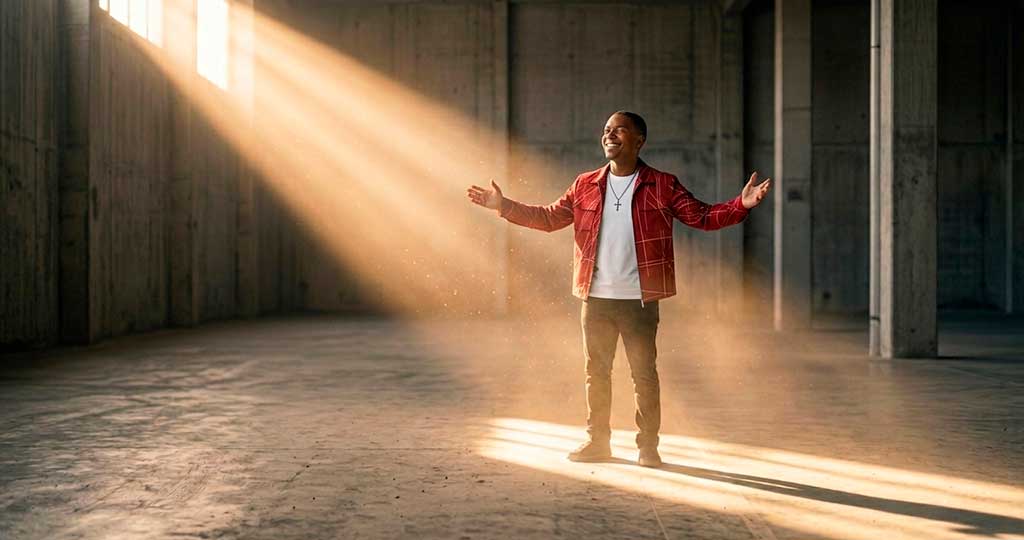
We have all been told a version of the story where faith acts as a map to a smoother life. We imagine that if we pray hard enough or believe deeply enough, the “broken roads” of our past will naturally pave themselves over, but true biblical resilience reveals that the reality is often far heavier. We find our faith buried under loads that feel impossible to carry, wandering through a landscape where the map doesn’t match the terrain. There is a haunting curiosity in why some people find a way to stay upright while their foundations are shaking, while others are consumed by the “house of blues.” It forces us to ask: what if the goal isn’t a life without shadows, but a strength that remains even when the light feels miles away? The rhythm of a life truly surrendered suggests something counter-intuitive—that the deepest peace isn’t found in the… read more


