
The Ancient Debate in a Modern World A persistent skepticism shadows modern theological discourse, often manifesting as the claim that the Trinity was a late-stage pagan invention or a philosophical construct forged at the Council of Nicaea. Critics and “silly goosees” alike argue that the doctrine is a tradition superimposed upon the text rather than a reality derived from it. However, such claims typically rely on a surface-level reading of Scripture. When we move beyond historical labels and engage in rigorous “contextual exegesis,” we find that the plurality of the Godhead is not a later addition, but the internal heartbeat of the biblical narrative. To the cognizant student of the Word, rigorous exploration of the biblical evidence for the Trinity is not an interpretation; it is a literal observation of the text’s own internal context. Identifying the “Grammar” of Trinity Biblical Evidence in Creation The defense of the Trinity does… read more

biblical truth

Interfaith dialogue often exists in a space of polite, academic disagreement—until the final prophet argument hits the tectonic plates of absolute truth claims. The friction begins with a collision of timelines: What happens when the Islamic doctrine of Muhammad as the “Seal of the Prophets” meets the New Testament claim that Jesus Christ is God’s definitive final word? In a recent viral encounter, this tension was laid bare. It wasn’t just a debate over verses; it was a high-stakes investigation into whether a later revelation “completes” what came before or fundamentally alters it. For anyone interested in the mechanics of faith, the speaker’s logic provides a fascinating, sharp-edged look at why these two “finalities” simply cannot occupy the same space. 1. Takeaway 1: The Final Prophet Argument and a Collision of Timelines The theological friction starts with who gets the last word. In the Quran (Surah Al-Ahzab 33:40), Muhammad is… read more
We have all been told a version of the story where faith acts as a map to a smoother life. We imagine that if we pray hard enough or believe deeply enough, the “broken roads” of our past will naturally pave themselves over, but true biblical resilience reveals that the reality is often far heavier. We find our faith buried under loads that feel impossible to carry, wandering through a landscape where the map doesn’t match the terrain. There is a haunting curiosity in why some people find a way to stay upright while their foundations are shaking, while others are consumed by the “house of blues.” It forces us to ask: what if the goal isn’t a life without shadows, but a strength that remains even when the light feels miles away? The rhythm of a life truly surrendered suggests something counter-intuitive—that the deepest peace isn’t found in the… read more
Religion is frequently a matter of inheritance rather than investigation. For many, faith consists of a collection of traditions passed down through generations, seldom subjected to the rigors of historical or textual scrutiny. However, when the primary sources of Islam and Christianity are placed in direct dialogue, a series of logical and theological crossroads emerge. This tension is often referred to as the Islamic Dilemma—a specific logical trap where the Quran’s own verses appear to undermine its authority by validating the very scriptures that contradict its core message. The following takeaways distill high-impact theological debates, highlighting the inconsistencies that arise when believers move beyond modern commentaries and engage directly with the claims of their own texts. 1. The Uncreated Nature of Jesus (The “Word” Paradox) A central pivot point in this interfaith dialogue is the ontological status of Jesus. While standard Islamic teaching classifies Jesus as a mere human prophet,… read more
1. Introduction: The Paradox of Devotion We often speak of religious devotion as a climb toward the light, a series of steps that surely lead to peace. But for a young girl growing up in a devout home in Iran, the climb felt more like a descent. A Muslim encounter with the supernatural often starts with a search for purity, but for her, the rituals offered no refuge from her past. Having survived sexual assault by a relative at a tender age, she carried a “defilement” she felt she could never outrun. Driven by this internal agony, she threw herself into the heart of her faith, wearing the chador and performing rituals with frantic precision, only to find that the more she prayed, the more a specific darkness seemed to answer. 2. The “Empty Drum” of Ritualistic Performance The narrator’s transition into deep religiosity was marked by what she calls… read more

The phrase “a house divided” is a staple of modern discourse, often invoked during times of political friction or social upheaval. We treat it as a self-evident truth—a warning that a lack of cooperation leads to inevitable failure. However, the depth of this concept goes far beyond the polished rhetoric of a campaign trail. To understand the true weight of this warning, we must look at how it has been used across biblical history and contemporary social conflicts. It is not merely a call for teamwork; it is a diagnostic tool for identifying the internal rot that causes structures to collapse. By examining the evolution of this phrase, we discover that “division” is less about a difference of opinion and more about the fundamental stability of our lives. The Metric of Standing: When A House Divided Falls The most recognized version of this warning appears in the Synoptic Gospels. In… read more

The journey of faith often begins with an attraction to discipline. For many “reverts”—those who come to Islam from secular or military backgrounds—the structured life of prayer (salah), the clear moral boundaries, and the sense of absolute devotion provide a sanctuary in a chaotic world. Yet, for some, this honeymoon period is met with a “wall of silence.” Consider the experience of a Hispanic veteran who recently shared his struggle on the GodLogic platform. Despite his military-honed discipline and passion for his new faith, he found himself “shunned” by a community that viewed his non-Middle Eastern background with suspicion. Isolated, he was forced to learn the basic requirements of salah on his own, using only the most basic standards available. This isolation becomes a crucible when a seeker’s drive for truth leads them to investigate historical documentation and the Sahih sources that religious leadership frequently labels as “anti-Islamic propaganda.” 1…. read more
Introduction: The Relatable Objection 5 Surprising Reasons the Quran Validates the Gospels. If you have ever shared your faith with a Muslim, you have likely encountered the “Standard Narrative”: the Bible is corrupted (tahrif), the Apostle Paul subverted the message of Jesus, and the Gospels we possess are unreliable because they are “anonymous.” This framework is designed to dismiss the New Testament out of hand, replacing the historical record with a “phantom Injil”—a lost revelation that supposedly looked exactly like modern Islam. Both “Injil” and “Injeel” refer to the same concept: the Gospel revealed to Jesus in Islamic belief; the difference is just spelling in English. When faced with this, most Christians default to a defensive posture, citing manuscript variants or early Church Fathers. However, the “GodLogic” approach advocates for a proactive tactical shift. Instead of immediately defending the Bible, we subject the Islamic position to its own criteria. This… read more

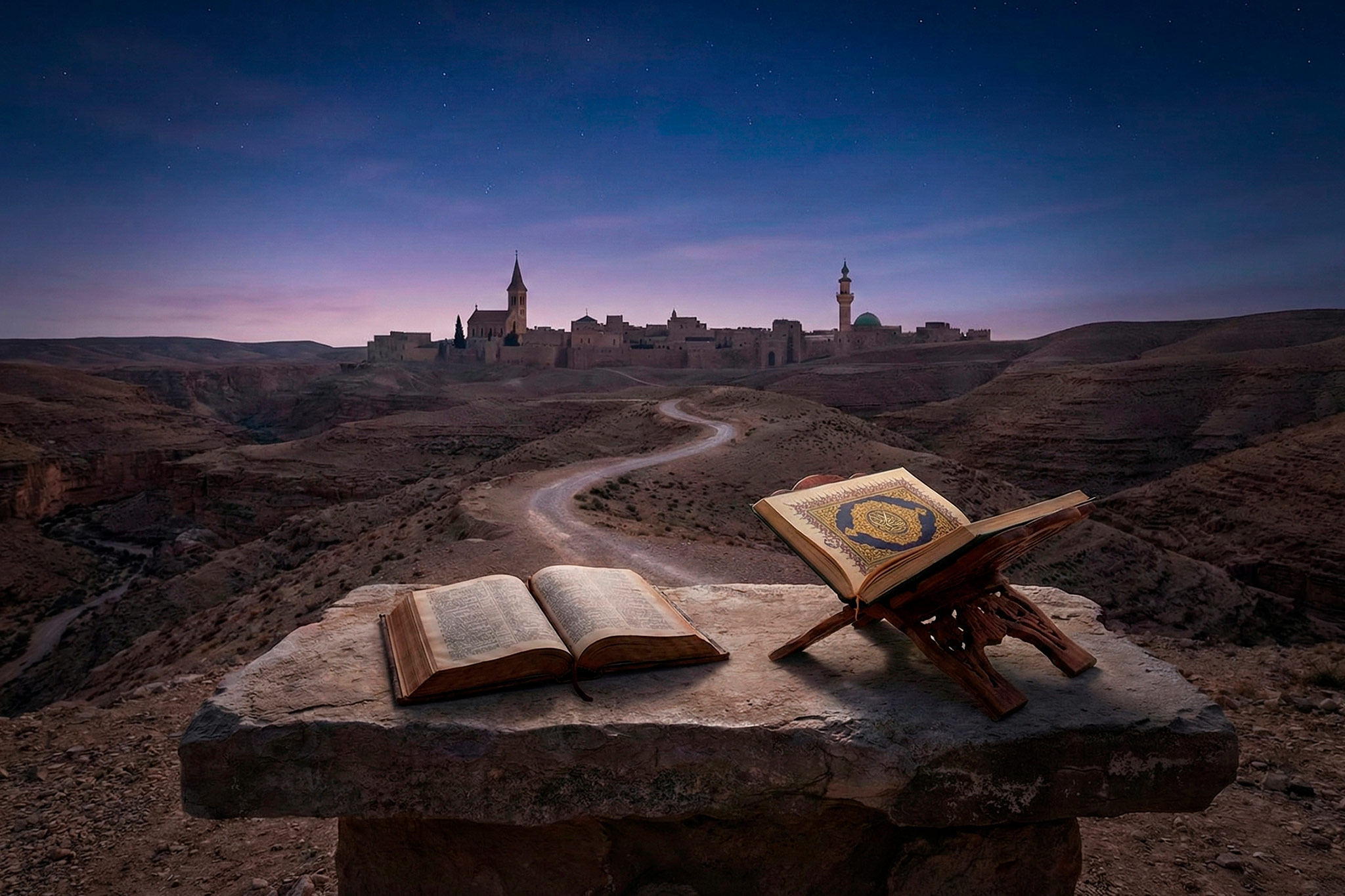
Beyond the Sunday School Stories For many, the Bible and Quran are familiar in name only. We may know the most famous stories—Noah’s ark, Moses parting the sea, or the night journey of a prophet—but this surface-level awareness often obscures the more complex and challenging realities embedded within these texts and their histories. The common narratives we inherit are often simplified, smoothed over, and sanitized.
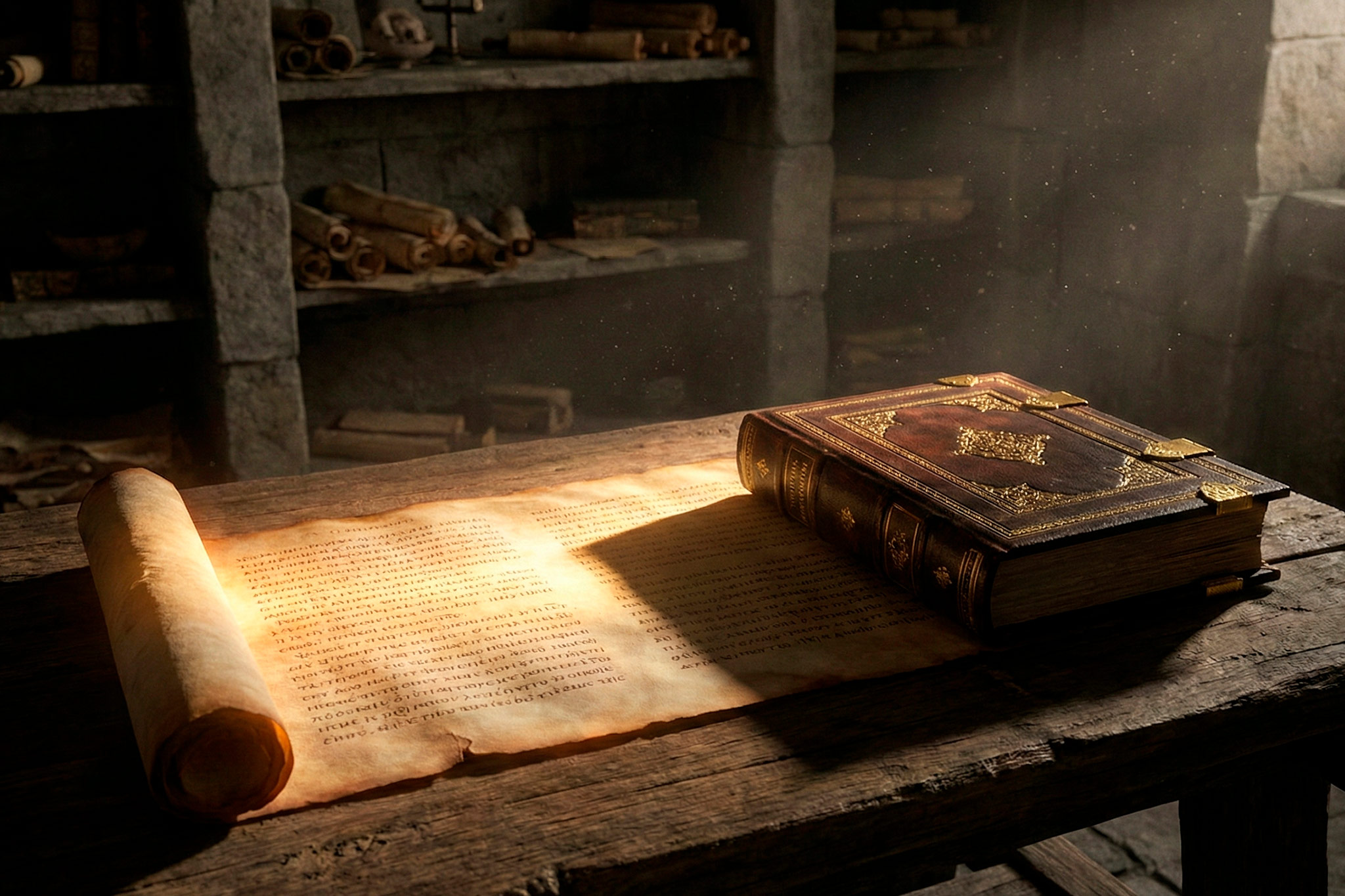
When engaging in interfaith dialogue, we often hear that Islam and Christianity simply have different views on Jesus. But a closer look at history reveals something far more intentional. The Gospels were written in the first century, establishing the identity of Jesus Christ through eyewitness testimony. The Quran arrived six centuries later.

The internet is littered with the digital wreckage of religious debates. What often starts as a discussion (Muhammad in the Bible) about faith quickly devolves into a shouting match of disconnected proof-texts and personal attacks. Genuine, intellectually honest conversations—where listening is valued as much as speaking—are exceptionally rare.


