
1. Introduction: The Messenger Who Claims to Be the King In the shimmering heat of the Midianite desert, Moses encountered a sight that defied the natural order: a bush that burned but was not consumed. Yet, the greater mystery lay not in the fire, but in the voice. The text of Exodus tells us that “the Angel of the Lord” appeared in the flame, yet this messenger immediately identified Himself as “the God of Abraham.” This presents a profound theological paradox. How can a being be sent by God and yet speak, act, and receive worship as God? For centuries, scholars have utilized the term Christophany—a pre-incarnate appearance of Jesus Christ—as the master key to unlock this ancient puzzle. It suggests that long before the Incarnation in Bethlehem, the second person of the Trinity was serving as the visible presence of the invisible Father. 2. When an Angel Says “I… read more

Apologetics

The journey of faith often begins with an attraction to discipline. For many “reverts”—those who come to Islam from secular or military backgrounds—the structured life of prayer (salah), the clear moral boundaries, and the sense of absolute devotion provide a sanctuary in a chaotic world. Yet, for some, this honeymoon period is met with a “wall of silence.” Consider the experience of a Hispanic veteran who recently shared his struggle on the GodLogic platform. Despite his military-honed discipline and passion for his new faith, he found himself “shunned” by a community that viewed his non-Middle Eastern background with suspicion. Isolated, he was forced to learn the basic requirements of salah on his own, using only the most basic standards available. This isolation becomes a crucible when a seeker’s drive for truth leads them to investigate historical documentation and the Sahih sources that religious leadership frequently labels as “anti-Islamic propaganda.” 1…. read more
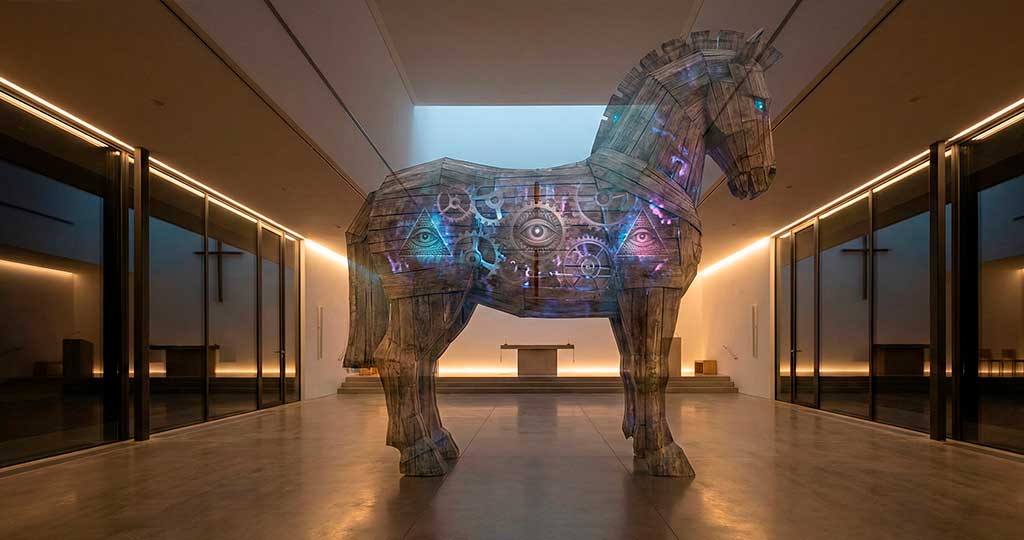
1. Introduction: The Spiritual Trojan Horse Many modern seekers hold beliefs they consider “progressive” or “spiritual,” unaware that they are participating in a New Thought movement with deep historical and metaphysical roots. This influence operates through “Happy Lies”—ideological Trojan horses that appear attractive and empowering on the outside but harbor a syncretic deception within. These beliefs promise personal authority and manifestation, yet they are often a subtle rebranding of ancient ideas that function as something entirely different from traditional faith. By analyzing the mechanics of this hidden influence, we can see how it has shaped a world that is increasingly self-obsessed while remaining ontologically adrift. 2. New Thought Movement vs. New Age: Why the “Christian” Version is More Dangerous There is a critical distinction between the “New Age” movement and the New Thought movement. New Age is generally recognizable as occultic, rooted in Eastern mysticism, Hinduism, and Buddhism. It is… read more
Introduction: The Relatable Objection 5 Surprising Reasons the Quran Validates the Gospels. If you have ever shared your faith with a Muslim, you have likely encountered the “Standard Narrative”: the Bible is corrupted (tahrif), the Apostle Paul subverted the message of Jesus, and the Gospels we possess are unreliable because they are “anonymous.” This framework is designed to dismiss the New Testament out of hand, replacing the historical record with a “phantom Injil”—a lost revelation that supposedly looked exactly like modern Islam. Both “Injil” and “Injeel” refer to the same concept: the Gospel revealed to Jesus in Islamic belief; the difference is just spelling in English. When faced with this, most Christians default to a defensive posture, citing manuscript variants or early Church Fathers. However, the “GodLogic” approach advocates for a proactive tactical shift. Instead of immediately defending the Bible, we subject the Islamic position to its own criteria. This… read more


Introduction: Myths vs. Reality Ask ten people how the Bible was formed, and you’ll likely get ten different answers, most of them shaped by Hollywood fiction and cynical soundbites. It’s often viewed as a book whose contents were decided by a shadowy committee, a text so riddled with errors that its original message is lost. These are myths of convenience—oversimplifications that make it easy to dismiss the text without serious engagement. However, understanding the Bible’s origins reveals a foundation that is far more surprising and intellectually robust. The story of how the Bible came to be—from its composition and recognition to its transmission and core theology—challenges these popular caricatures. This article will explore four of the most impactful and counter-intuitive truths about the Bible’s origins and reliability, dismantling the myths and revealing a more compelling reality. 1. The Bible’s Origins Show Books Were Recognized, Not Picked The popular image of… read more
1.0 Introduction: The Unshakeable Pillar of Monotheism The absolute oneness of God is the bedrock of Islam. It is the first and most fundamental principle, a concept understood as the unshakeable pillar upon which the entire faith rests. This core doctrine of monotheism—that God is a single, indivisible being—is universally accepted and central to Muslim identity. But what if a leading Islamic thinker, navigating the metaphysical tightrope of a high-stakes debate, made an argument that seemed to splinter that divine oneness into dozens of separate realities? This is precisely the scenario that unfolded in a recent discussion concerning the 99 ontologies, leading to a cascade of contradictions that has shocked many observers. This post will explore three key takeaways from a debate that raised profound and uncomfortable questions about the nature of God in Islamic philosophy. 2.0 Takeaway 1: The 99 Ontologies Admission and Multiple Realities The discussion featured “Jake… read more

Beyond the Sunday School Stories For many, the Bible and Quran are familiar in name only. We may know the most famous stories—Noah’s ark, Moses parting the sea, or the night journey of a prophet—but this surface-level awareness often obscures the more complex and challenging realities embedded within these texts and their histories. The common narratives we inherit are often simplified, smoothed over, and sanitized.

When engaging in interfaith dialogue, we often hear that Islam and Christianity simply have different views on Jesus. But a closer look at history reveals something far more intentional. The Gospels were written in the first century, establishing the identity of Jesus Christ through eyewitness testimony. The Quran arrived six centuries later.

The internet is littered with the digital wreckage of religious debates. What often starts as a discussion (Muhammad in the Bible) about faith quickly devolves into a shouting match of disconnected proof-texts and personal attacks. Genuine, intellectually honest conversations—where listening is valued as much as speaking—are exceptionally rare.
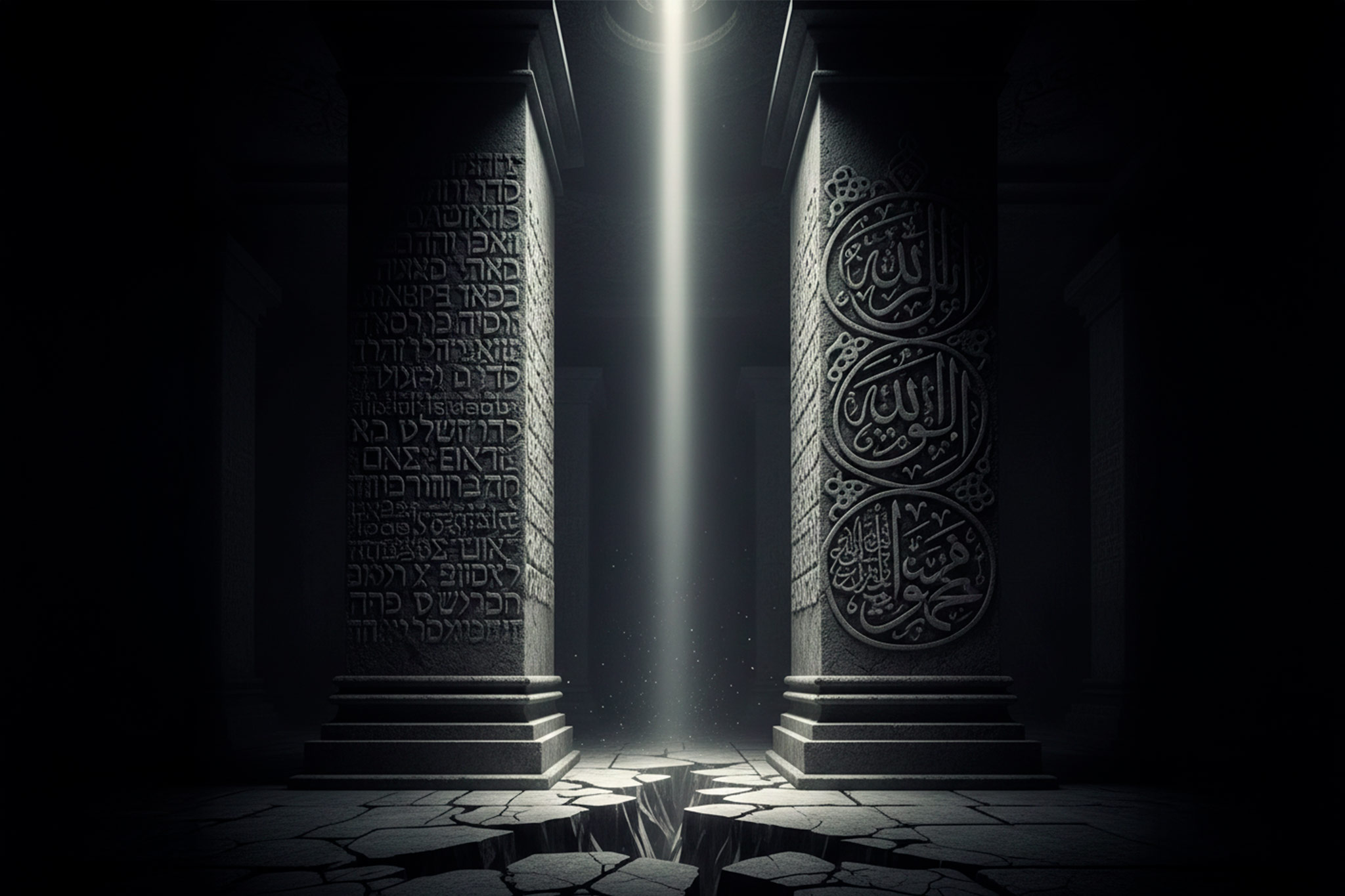
Discover the Islamic Dilemma: A logical challenge exploring how the Quran’s affirmation of the Bible contradicts its own message. Can both be true? Explore the evidence.
Imagine converting to a new faith, only to encounter a foundational challenge (The Islamic Dilemma) you’ve never considered. That was the reality for “Elijah,” a new Muslim since November of last year, when he entered a live discussion and came face-to-face with a powerful logical problem.

Gist: Clarifying a very popular view about the topic Article 13 (from my latest book, A Controversial Clergyman) It is too widespread a confusion for me to leave it unchallenged. I am talking about the claim that belief is inferior to knowledge (without more, as lawyers would say). Michael Abrahams’ column in the Gleaner yesterday (July 9, 2018) betrayed this confusion and I had to deal with it in passing in a public forum at UTECH in 2001 involving Dr. Leahcim Semaj and Mutabaruka. Every statement purporting to be fact or true is a belief. Indeed, if you call to mind the basic moods in English language sentences, then if it is not a question (interrogative mood), a command (imperative mood), a wish (subjunctive mood), then it is in the indicative mood (an assertion, claiming something). Every such assertion or claim qualifies as a belief, but since some beliefs are quite… read more
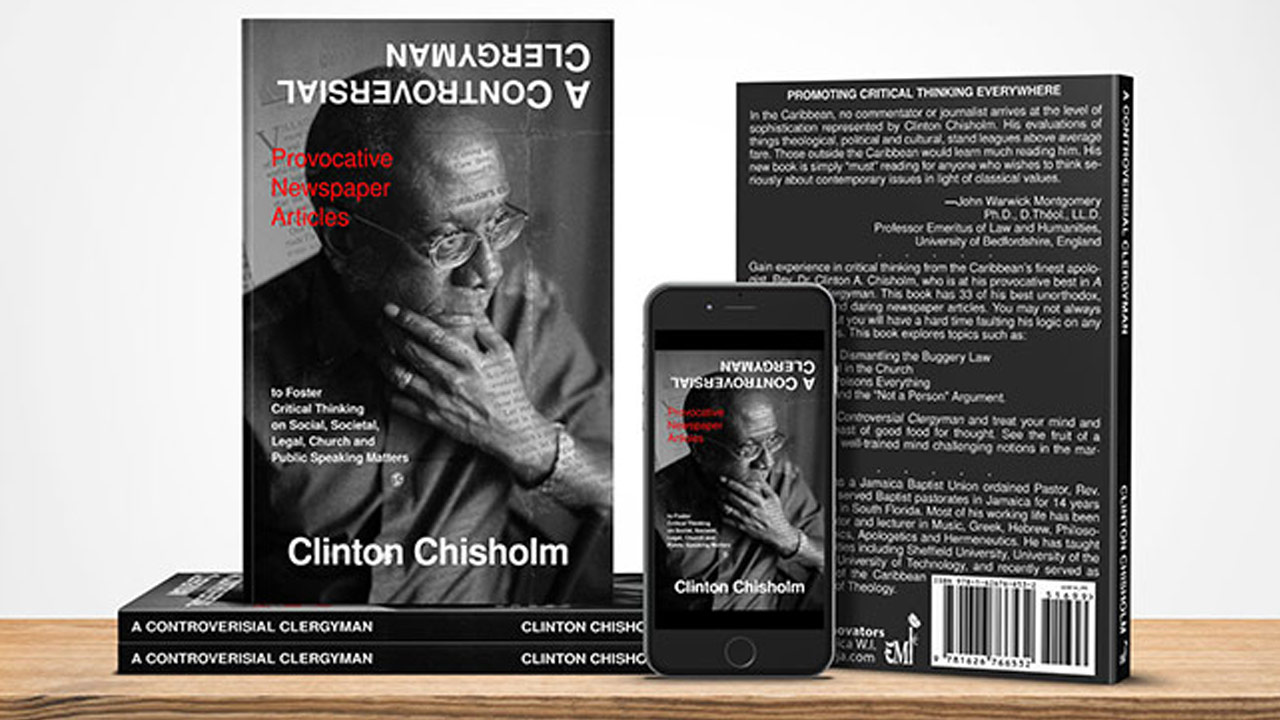
Check out the new book, A Controversial Clergyman, by Rev. Dr. Clinton Chisholm. Now available on Amazon.com. A Controversial Clergyman showcases, provocative Newspaper Articles to Foster Critical Thinking on Social, Societal, Legal, Church and Public Speaking Matters. Promoting Critical Thinking Everywhere In the Caribbean, no commentator or journalist arrives at the level of sophistication represented by Clinton Chisholm. His evaluations of things theological, political and cultural, stand leagues above average fare. Those outside the Caribbean would learn much reading him. His new book is simply “must†reading for anyone who wishes to think seriously about contemporary issues in light of classical values. John Warwick Montgomery, Ph.D., D.Th©ol., LL.D. Professor Emeritus of Law and Humanities, University of Bedfordshire, England Gain experience in critical thinking from the Caribbean’s finest apologist, Rev. Dr. Clinton A. Chisholm. who is at his provocative best in A Controversial Clergyman. This book has 33 of his best… read more
The more popular claims of borrowing or influence between Christianity and the mysteries pertain to the birth/death/resurrection of Jesus Christ. What were the mystery religions? The mystery religions (contrary to George James’ book Stolen Legacy: Greek Philosophy is Stolen Egyptian Philosophy) were really Hellenistic religions, called ‘mystery’ because they involved secret ceremonies that were thought to bring their initiates some special benefits. They were more or less based on the annual vegetation cycle of life (spring) and death (fall). Each religion originated from different areas. From Mesopotamia—Tammuz or Dumuzi (the Sumerian version); from Egypt—the cult of Isis and Osiris (later called Serapis); from Greece—the cults of Demeter and Dionysus which later developed into the Eleusinian and Orphic mystery religions; from Phrygia in Asia Minor—the cult of Cybele and Attis; from Syria/Palestine—the cult of Adonis and from Persia (modern Iran)—the cult of Mithra (twin brother of the Zoroastrian god Ahura Mazda). Before responding… read more

The Bible is probably the only ancient text that any Mike, Mary or Marcia waxes warm about despite stark ignorance of the book’s actual texts and historical contexts (plural). The lay critic may be very educated but (s)he and even most Christians need to understand how to read an ancient text from a different linguistic and cultural milieu than ours. I illustrate the need with the issue of slavery in the Bible, an issue I had to deal with in a Barbados newspaper years ago in response to a learned critic there. Said critic charged that “Slavery is justified in both principle and practice throughout the Old and New Testament.†Most of us learned in English literature class the basic point that a text must be read in light of its context. What contextual cues do we need to bear in mind to read the Bible responsibly? Well for starters we need to… read more

Scientific Problems for Atheists ‘Village atheists’ and the more educated ones need to read and properly digest the contents of Antony Flew’s last book. The late world renowned British Philosopher and ‘most notorious atheist’ Antony Flew in his last book gave details of the thinking that led him to abandon atheism. The book published in 2008 was titled There is a God. One of the three cardinal issues that made Flew abandon atheism was a critical event which he said could not at all be explained from a naturalistic or materialistic base but which made sense if you invoke God. Drawing on the work of fellow philosopher David Conway, Flew raises the first of three challenges to Darwinian naturalism. He says, “The first challenge is to produce a materialistic explanation for ‘the very first emergence of living matter from non-living matter. In being alive, living matter possesses a teleological [purpose-driven]… read more

Any statement about causation or origin which uses the word chance is worthless, philosophically. The academic credentials or prestige of the person making such a statement is unimportant, the statement is still worthless. Take for example the basic belief held by most Astronomers and atheists prior to Vesto Slipher’s expanding universe discovery in 1913, “the Universe simply exploded into being, by chance, at the big bang and thus there’s no need for any God.†Or ponder the words of the Nobel scientist Jacques Monod in his book Chance and Necessity, “…chance alone is at the source of every innovation, of all creation in the biosphere. Pure chance, absolutely free but blind, at the very root of the stupendous edifice of evolution…†(page 112) Let me alert you to the fact that though we tend to use the word ‘chance’ loosely, chance is not a substance or entity that can… read more

A popular view among many people today is that all truth is relative; no truth is objective. By objective is meant true by means independent of the person asserting any truth-claim. For example, if someone says, “Fish is my favorite meat†that statement would be true relative to the experience of the speaker. In contrast, if someone should say, “All living things have encoded biological information in their DNA†that statement would not be relative to the speaker’s perception for it would be true regardless of who made the statement. Objective truth then, is truth beyond mere opinion. It is truth verifiable and undeniable as fact by rational beings other than the one making the claim. Strangely then, despite so much talk about living in an Age of Science & Technology that is remarkable, the belief is so common that ‘all truth is relative’. Indeed, this notion prevails not only… read more
It may be rebutted but it cannot be refuted that no one can live and no academic discipline can operate without faith, properly defined! Faith, like its twin sister hope, is fragile but is a fundamentum in life, by that I mean it is absolutely foundational to life. So you ask me what then is faith in my book? As I have argued in lecture theatres and urged in sermons, faith is belief, based on but slightly in excess of evidence. Hope, if you must know, is confident assurance about the ‘not yet’. Those who are familiar with Hebrews 11.1 may be wondering about the nature of my definition. For those who lack familiarity with the Bible I’ll quote that text then explain the difference between it and my approach to faith. Heb. 11:1, from the New Revised Standard Version reads, “Now faith is the assurance of things hoped for,… read more
Ancient books are not always, if ever, easy to read properly, unless one can find helpful background information. The Herods in the New Testament are not clearly differentiated, so we read about King Herod in Mt. 2:1(re the nativity of Jesus) then there is a King Herod in Mk. 6:18 (the one whom John rebuked for marrying his brother’s wife) and there is yet another King Herod in Acts 12:1-2(who had James the brother of John killed). Same guy? No. The King Herod of the nativity accounts was King Herod the Great, that master-builder who was appointed puppet King of the Jews in 40 BC and who ruled as King of Judea from 37 BC until his death in 4 BC. When Herod the Great died in 4 BC the territories under his jurisdiction were divided among his sons. So [Herod] Archelaus (called ‘Herod the Ethnarch’ on his coins) ruled… read more
I found an article written by the “Script Howard News Service” with the following heading: “Bush is of Two minds, One is Wrong.” As I read on I notice they say: “When it comes to science, President Bush is of two minds, one of which is wrong.” “Concerning the space shuttle program, he defers to the views of experts.” “In a conversation with Texas reporters, he said that ‘the experts at NASA’ will determine whether the shuttle should be retired before 2010.” “But when it comes to science education, he unfortunately sees no need for experts. Answering a question about evolution vs. intelligent design, he said it was a question for local school districts, but he felt ‘both sides ought to be properly taught.’” And he added, ‘so people can understand what the debate is all about.” “But among experts, there is no debate worth mentioning. The theory of evolution… read more
The simplest conceivable life form has about 600 protein molecules. The chance that even a SINGLE molecule could form by chance arrangement of the sequence of the amino acids in it would be between 10^450 and 10^600, depending on whose data you study. How many INCHES LONG do you suppose it is from one end of the universe to the other, at least with our present astronomical knowledge? Can you guess? It is about 10^28! That seems a small number, but consider that the distance is in INCHES. And to form ONE molecule the probabilities are from 10^450 to 10^600? How outrageous does the data have to get before it becomes laughable? Remember that the theory of evolution says that this happened not once, but again and again and again. It seems apparent to me that we are dealing not only with a ridiculous theory, but with a sick theory,… read more
There is also a theory out that, as an embryo develops, its many appearances at different times reflect its `evolution`. This applies to all embryos, whether it be a bird, as turtle, or a human. I was taught this theory in college. Do you know when this theory was proven wrong? Back in the 1920`s. As someone once said, `There is nothing more fun than to watch an intelligent man expound on a stupid idea`. So what can you say? The above theory was called the `Biogenetic Law`, and it has been proven wrong or proven totally implausible so many times that it is ridiculous to even consider it. “This theory is now completely discredited by most embryologists.” – Dr. Jeffrey Bryne Over fifty years ago, Dr. Waldo Shumway [sp] of the University of Illinois said: “Experimental embryology demands that this hypothesis be abandoned.” If that’s the case, why is… read more
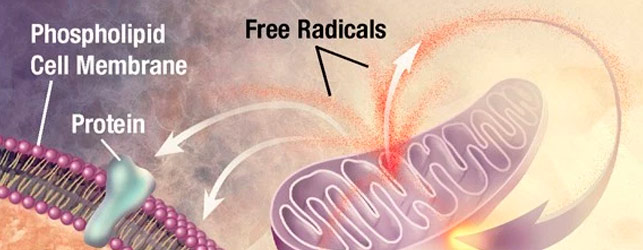
Lets talk about creationism versus the theory of evolution in regard to the various disciplines of science. We have already spoken of the astronomical side of this question. We will now consider the study of cells. These cells make up every living thing. What evidence is there in this area, which will settle the question of evolutionism versus creationism? If the theory of evolution is correct, then the accidental synthesis of the DNA molecule had to have taken place. As biological science learns more and more about the complexity of the cellular structure, the realization that this feat is impossible has set in. The DNA molecule can only be replicated in the presence of certain enzymes; numerous, complicated enzymes. Those enzymes themselves can only be replicated in the presence of DNA molecules. So, which came first, the chicken or the egg? It is not enough to `simply` synthesize the DNA… read more
You must be logged in to post a comment.